 وحدة الفوترة الإلكترونية الأوروبية
الفاتورة لا تتحول إلى ملف منظم
تكون الفاتورة صحيحة تجاريًا، لكن بيانات البائع أو العميل أو العنوان الإلكتروني غير جاهزة لإنتاج ملف XML قابل للمراجعة.
فحص قبل العرض: حضّر فاتورة حقيقية فشل تحويلها أو احتاجت تعديلًا يدويًا.
وحدة الفوترة الإلكترونية الأوروبية
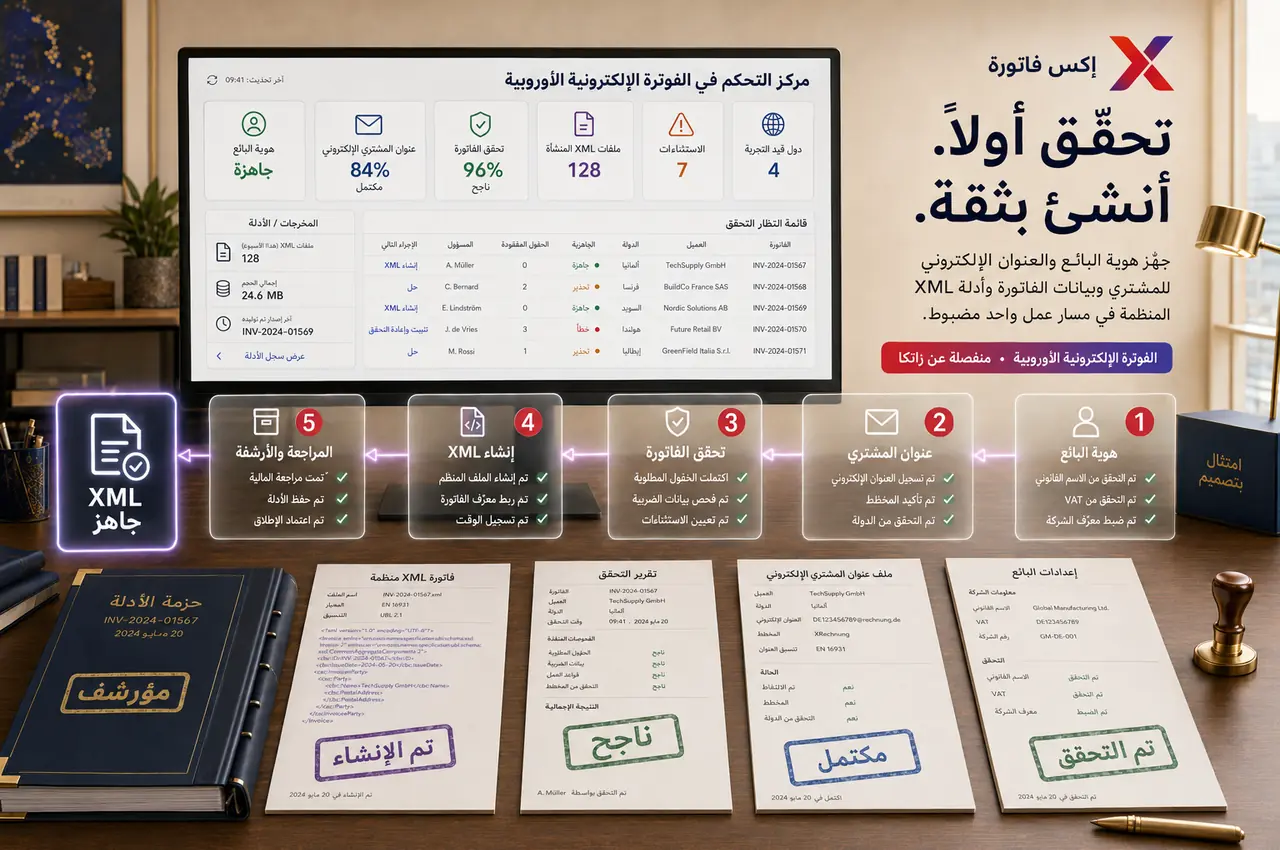
إكس فاتورة يساعد فرق المالية والفوترة على تجهيز بيانات الفاتورة الأوروبية، فحص العناوين الإلكترونية، إنشاء ملف XML، وحفظ دليل الإخراج ضمن مسار محدد للسوق.
ابدأ بفاتورة حقيقية وعميل كامل البيانات وعميل ناقص البيانات لتقييم الجاهزية بواقعية.
متى تحتاج E-Invoicing (EU)؟
هذه العلامات تكشف هل المشكلة في بيانات البائع أو العميل أو فصل المسارات أو حفظ الأدلة.
تكون الفاتورة صحيحة تجاريًا، لكن بيانات البائع أو العميل أو العنوان الإلكتروني غير جاهزة لإنتاج ملف XML قابل للمراجعة.
فحص قبل العرض: حضّر فاتورة حقيقية فشل تحويلها أو احتاجت تعديلًا يدويًا.
العنوان الإلكتروني للمشتري أو نظام العنوان أو الدولة غير واضح، فيتعطل الإخراج أو يخرج ملف غير قابل للاستخدام.
فحص قبل العرض: اختر عميلًا لديه بيانات فوترة ناقصة أو غير موحدة.
يتم التعامل مع كل متطلبات الفوترة الإلكترونية كأنها مسار واحد، فتختلط المسؤوليات والملفات والأدلة.
فحص قبل العرض: حدد الدولة والكيان القانوني ونوع الفاتورة قبل العرض.
يتم إنشاء ملف، لكن لا توجد مرجعية واضحة للفاتورة أو وقت الإخراج أو نتيجة التحقق أو عينة القبول.
فحص قبل العرض: جهّز مثالًا تحتاج فيه finance إلى evidence pack.
نطاق التحكم
الهدف أن يكون إنشاء XML نتيجة لمسار بيانات مضبوط، وليس زرًا منفصلًا بعد الفاتورة.
بيانات البائع: VAT والعنوان وCompany ID والعنوان الإلكتروني.
بيانات المشتري: Customer Electronic Address ونظام العنوان.
فحص الحقول المطلوبة قبل إنشاء XML.
إنتاج ملفات XML منظمة من الفواتير.
مراجعة مسارات دول أوروبية مدعومة قبل التوسع.
حفظ رقم الفاتورة ووقت الإخراج ومرجع الملف.
تصحيح البيانات وإعادة التوليد بعد الفشل.
فصل مسار EU عن متطلبات الفوترة الإلكترونية في الأسواق الأخرى.
تسلسل التطبيق
ابدأ بعينات واقعية، وثبّت بيانات البائع والعملاء، ثم اختبر الفشل والنجاح قبل التوسع.
استخدم فاتورة حقيقية، عميلًا كامل البيانات، عميلًا ناقص البيانات، وسيناريو دولة محدد.
راجع VAT والعنوان والدولة وCompany ID وElectronic Address والـ schemes.
تأكد من Customer Electronic Address وCustomer Electronic Address Scheme والدولة قبل الإخراج.
لا تختبر فاتورة ناجحة فقط. اختبر missing data وinvalid invoice وإعادة التوليد.
احتفظ بملف XML ورقم الفاتورة ووقت الإخراج ونتيجة التحقق وموافقة finance.
نقاط التسليم
بهذا تصبح بيانات العميل والفاتورة وملف XML والدليل المالي ضمن رحلة قابلة للمراجعة.
CRM ← E-Invoicing
بيانات العميل والبلد والعنوان الإلكتروني تبدأ من سجل العميل قبل الفاتورة.
E-Invoicing ← Accounting
ملف XML يبقى مرتبطًا بالمراجعة المالية والتحصيل والإقفال.
E-Invoicing ← Data Exporter
يمكن تجهيز حزم مراجعة تتضمن الفواتير والملفات ونتائج التحقق.
E-Invoicing ← الامتثال المحلي
كل سوق يملك متطلبات وملفات ونقاط تحقق مختلفة، لذلك يجب تحديد النطاق قبل التنفيذ.
تقارير وأدلة
الفائدة ليست في توليد الملف فقط، بل في إثبات أن البيانات والمسار قابلان للتكرار.
ملفات XML المولدة حسب الفاتورة والعميل.
أرقام الفواتير ووقت إنشاء الملف.
نتائج التحقق والحالات الناقصة.
قائمة العملاء ناقصي العنوان الإلكتروني.
مراجعة إعدادات البائع وCompany ID.
حزم pilot قبل الإطلاق.
تاريخ الفشل والتصحيح وإعادة التوليد.
حزم evidence حسب الدولة أو مجموعة العملاء.
لا. متطلبات الفوترة الإلكترونية تختلف حسب الدولة والكيان القانوني. هذه الصفحة تركز على جاهزية ملفات الفوترة الأوروبية وXML، بينما تُراجع الأسواق الأخرى في مساراتها المخصصة.
بيانات البائع، VAT، العنوان، Company ID، Electronic Address، ثم بيانات المشتري والعنوان الإلكتروني والـ scheme والدولة.
لا. يجب اختبار حالات نجاح وفشل ونقص بيانات وإعادة توليد، وليس المسار المثالي فقط.
يمكن استخدامها لمراجعة جاهزية البيانات والعناوين الإلكترونية، لكن لا يجب اعتبارها وعدًا بتغطية قانونية أو شبكة Peppol دون تحقق منفصل.
جهّز فاتورة، عميلًا كامل البيانات، عميلًا ناقص البيانات، إعدادات البائع، وسيناريو دولة أو عميل يحتاج ملف XML.
شاركنا فاتورة حقيقية، بيانات البائع، عميلًا كامل البيانات، عميلًا ناقص البيانات، وسيناريو دولة. سنراجع أين تتعطل عملية إنشاء XML وما الذي يحتاج ضبطًا قبل الإطلاق.