
What Xfatora connects
Core records such as customers, suppliers, items, invoices, approvals, and project references are shared across teams so decisions are based on one operational history.
Connected operating layer
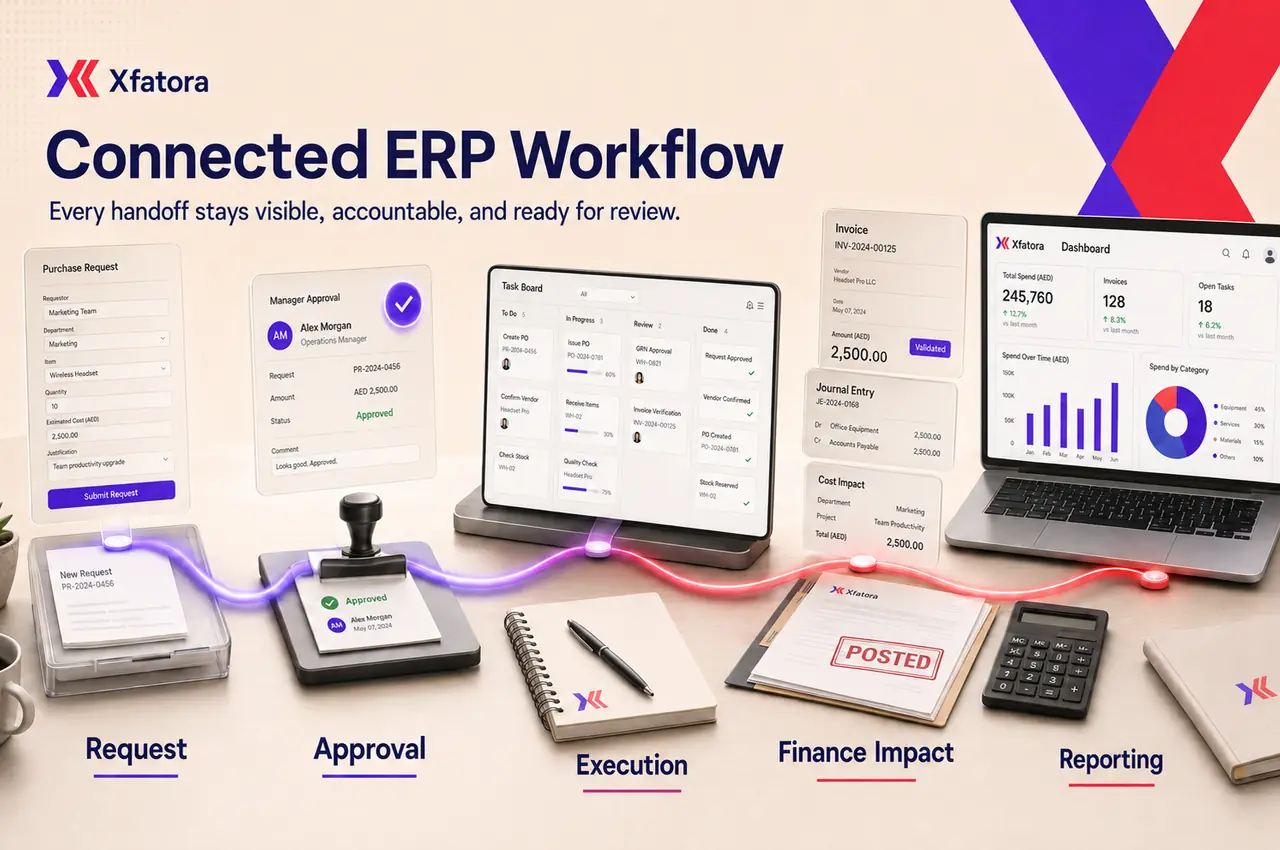
Xfatora is designed to connect teams that usually work in separate systems. The platform layer aligns records, approvals, and reporting so each module runs in the same operational context.

Core records such as customers, suppliers, items, invoices, approvals, and project references are shared across teams so decisions are based on one operational history.
Most organizations begin with one priority workflow, then expand to adjacent modules after ownership, reporting needs, and onboarding capacity are validated.
Approvals are tied to role accountability. Teams can see who requested, reviewed, and approved each step, reducing handoff confusion and duplicate entries.
The platform improves auditability by linking transactions and workflow actions to the same reporting context, helping leaders review performance with fewer blind spots.
No. Teams can start with one workflow and still benefit from common records, approval structures, and reporting practices.
It improves decision quality by linking operational activity and financial outcomes in a shared view that is easier to review and govern.
Bring your approval matrix, current reporting pain points, and first-phase workflow priorities so the conversation stays practical.