Vehicle register with plate, VIN, serial, make, model, type, group, ownership, documents, and lifecycle status
 Module
Fleet management and vehicle operations ERP software
Control vehicles, drivers, assignments, odometer handovers, maintenance, fuel, inspections, renewals, bookings, operating cost, and fleet availability.
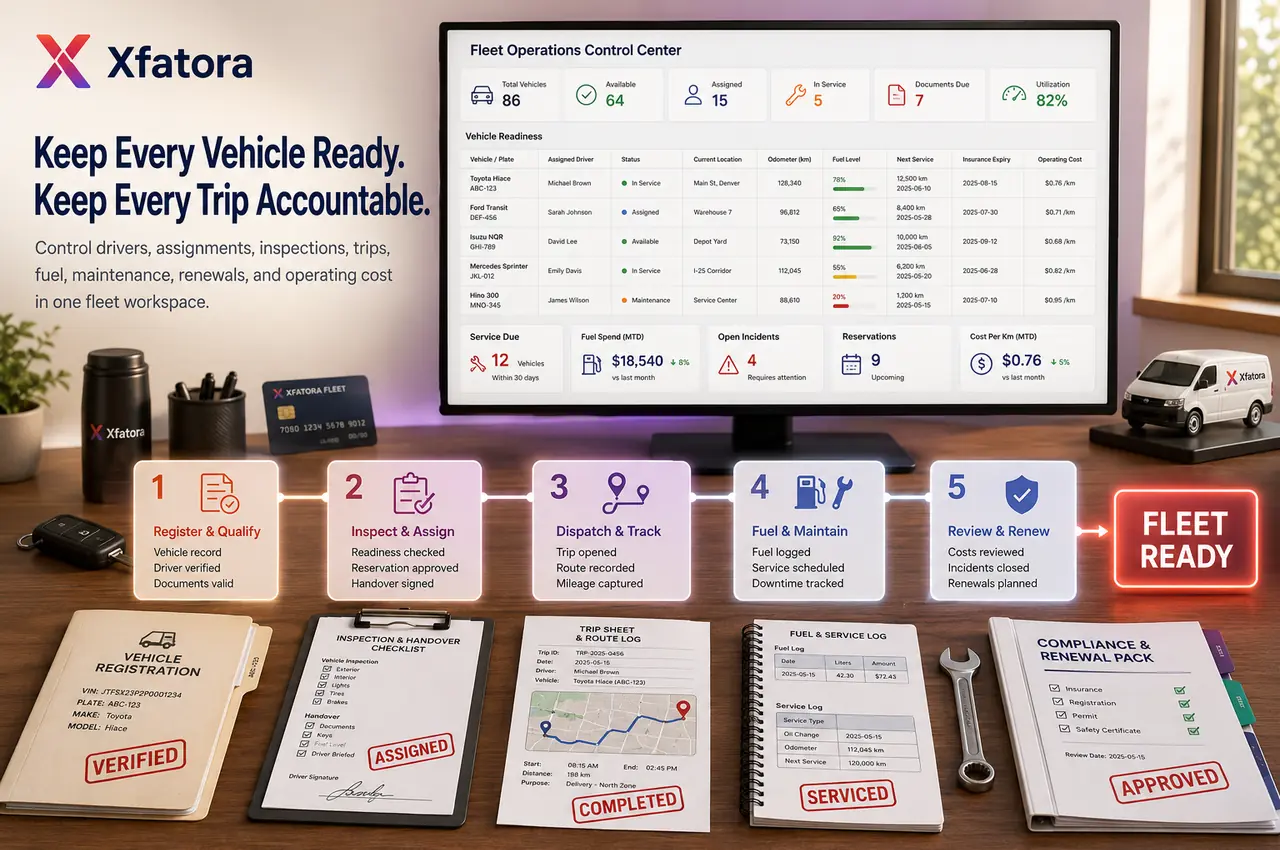
Xfatora Fleet Management helps operations, dispatch, maintenance, finance, branch, and fleet teams manage vehicle readiness, driver accountability, running cost, maintenance evidence, and renewal risk from one workflow.

Approved app available now
Take Fleet to the frontline.
Manage vehicles, drivers, assignments, odometers, fuel, maintenance, inspections, renewals, and operating costs from an ERP-connected fleet app.
What this module helps you control
Driver records, driver documents, license context, training notes, and assignment responsibility
Vehicle assignment, return, transfer, starting odometer, ending odometer, handover notes, and current assignee visibility
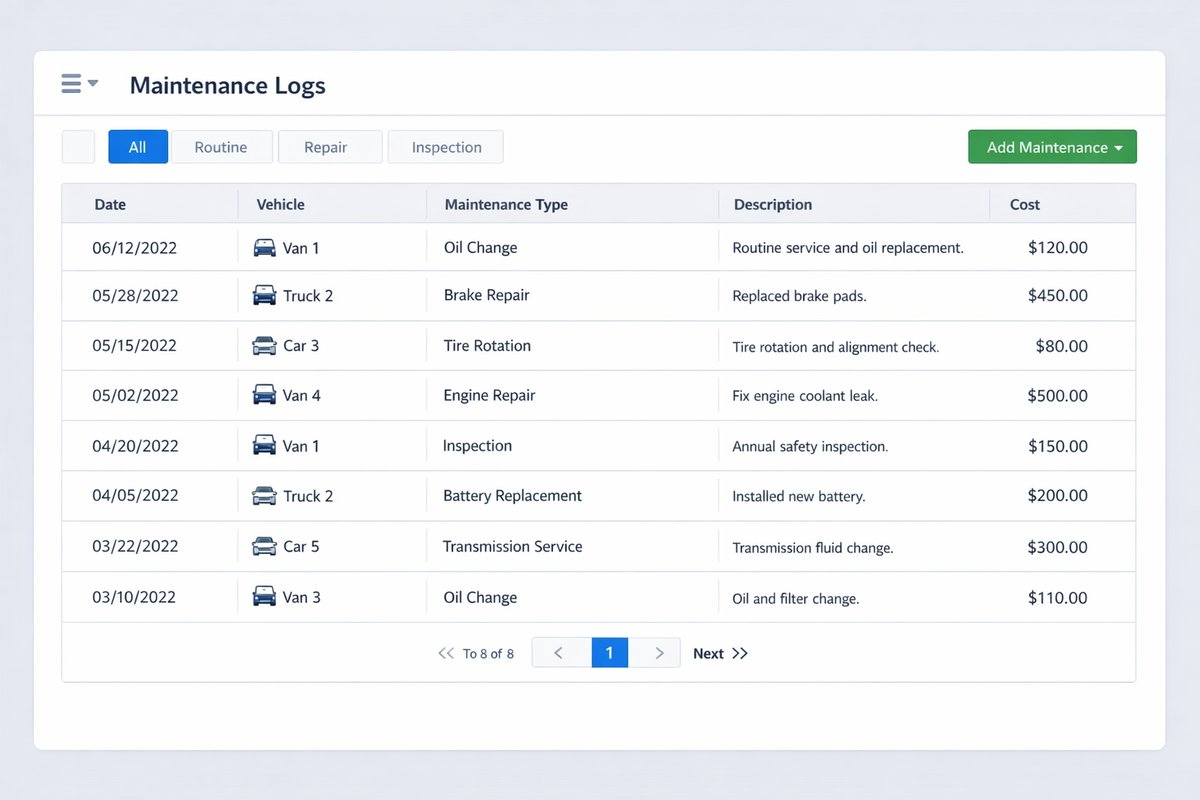
Maintenance logs, service history, work orders, garage work, parts ordered, repair cost, downtime, and closure evidence
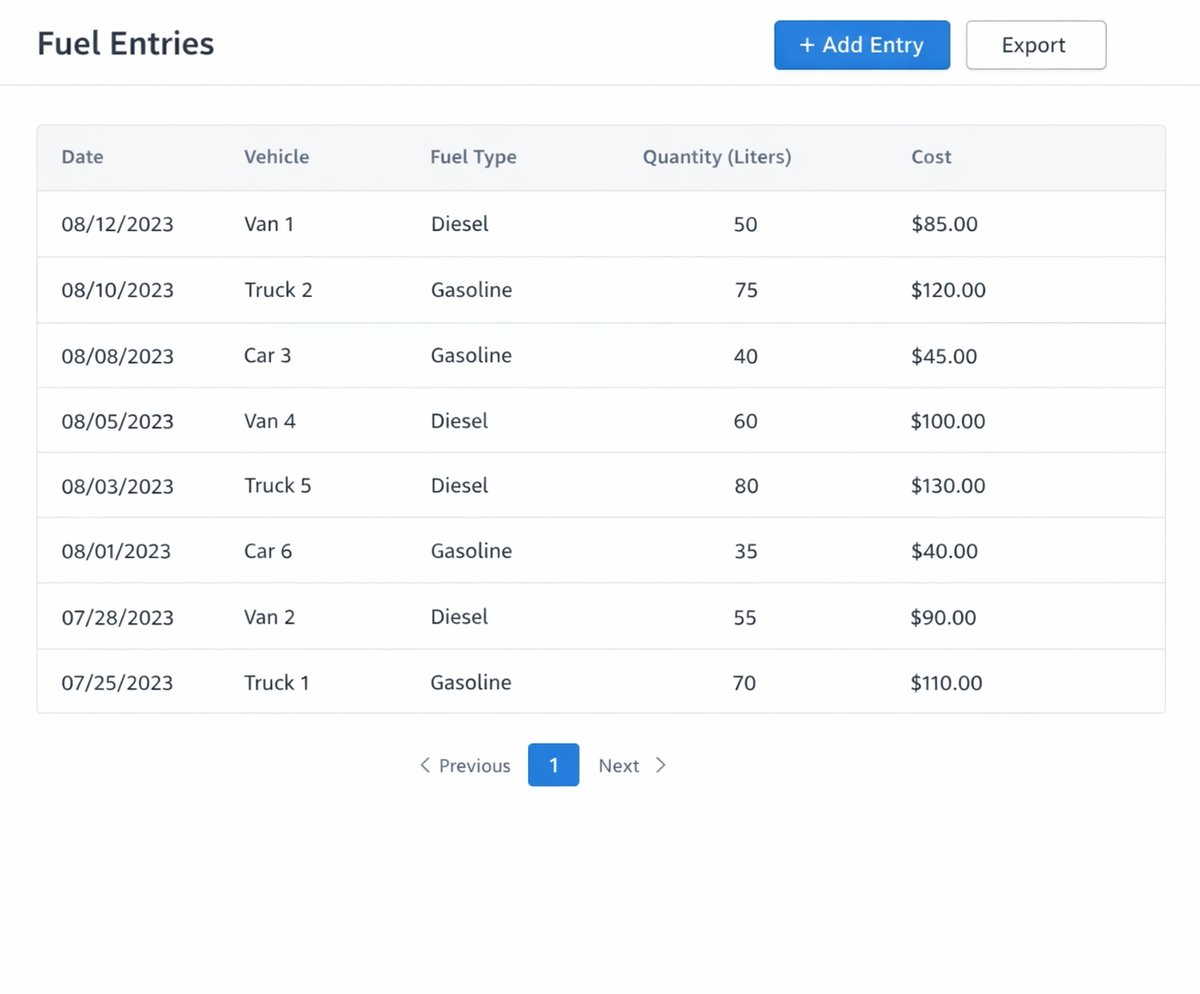
Fuel entries, fuel type, quantity, cost, odometer reading, fuel history, fuel summary, and usage anomalies
Inspections, inspection schedules, pass/fail submissions, corrective notes, and compliance evidence
Insurance, registration, renewal dates, vehicle renewal reminders, and document expiry follow-up
Vehicle request and booking workflows for shared fleet resources and branch usage
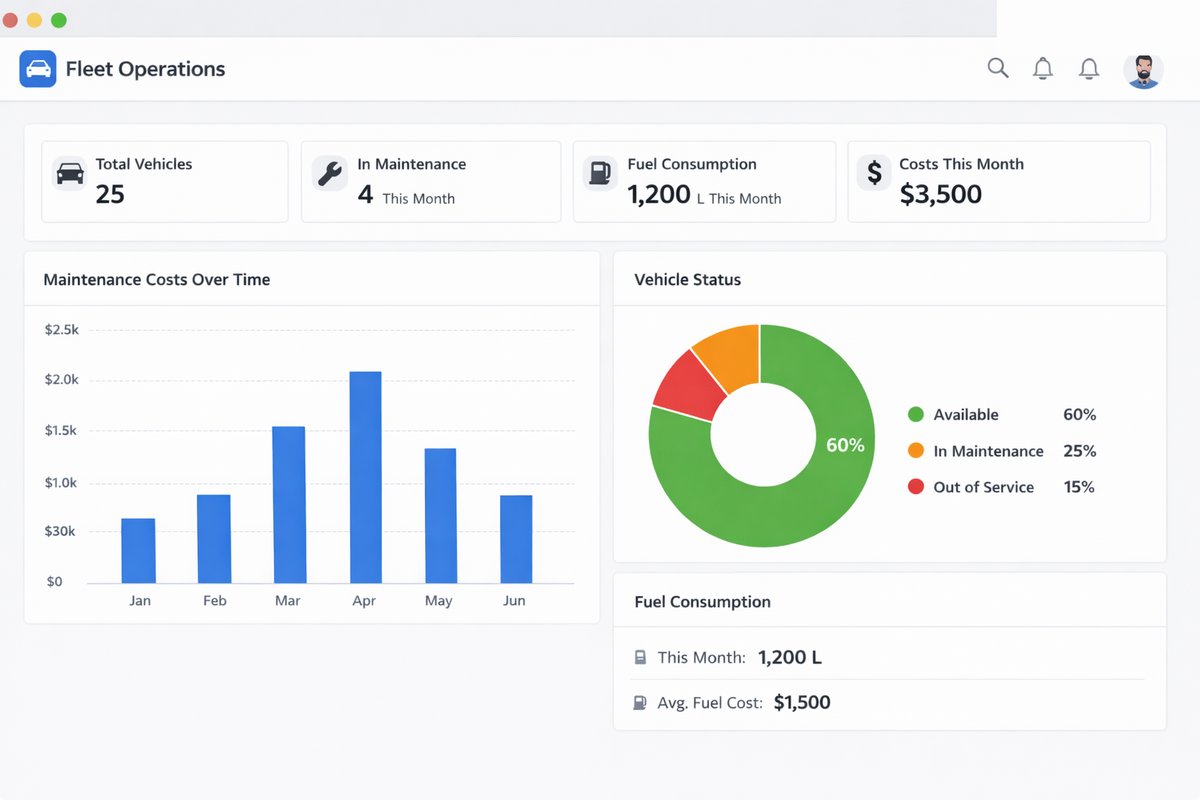
Operating cost summary, utilization review, cost-per-kilometer context, and repair-versus-replace planning
Fleet dashboard, reports, exports, audit packs, and monthly management review
Business outcomes teams expect
Maintain one reliable fleet register so vehicle records are no longer scattered across spreadsheets and chat.
Strengthen driver and vehicle accountability with clear current assignee and Assignment History.
Reduce missed maintenance actions using Maintenance Records, Work Order controls, and status discipline.
Improve visibility into fuel usage and operating cost trends through structured Fuel and cost records.
Protect compliance with date-based controls for insurance, inspections, and Vehicle Renewal Reminders.
Improve vehicle availability by tracking In Shop and Out of Service states with clearer recovery actions.
Preserve cleaner handover discipline with Starting Odometer and Ending Odometer checkpoints.
Make monthly cost review easier by comparing fuel, maintenance, and work order spending by vehicle and period.
Support repair-versus-replace decisions with lifecycle status, utilization context, and total running cost history.
Strengthen auditability with traceable logs for assignments, inspections, bookings, and lifecycle changes.
Screenshots
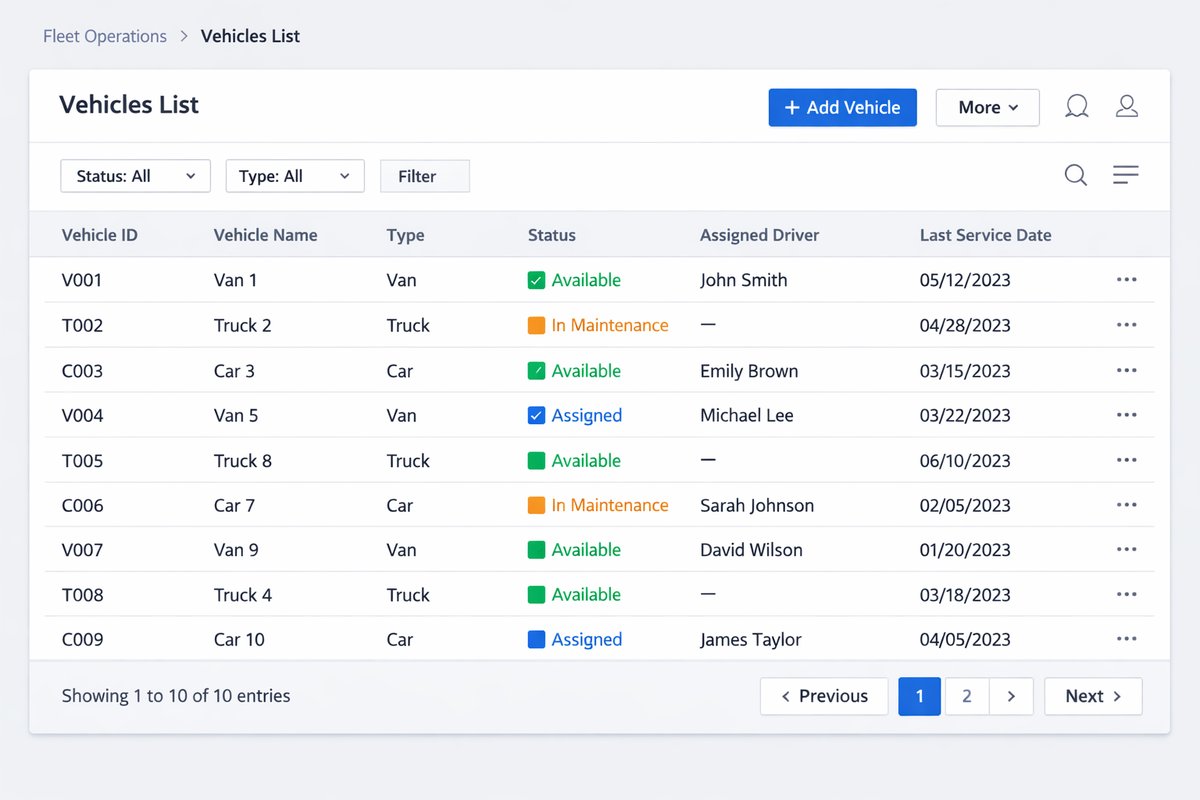
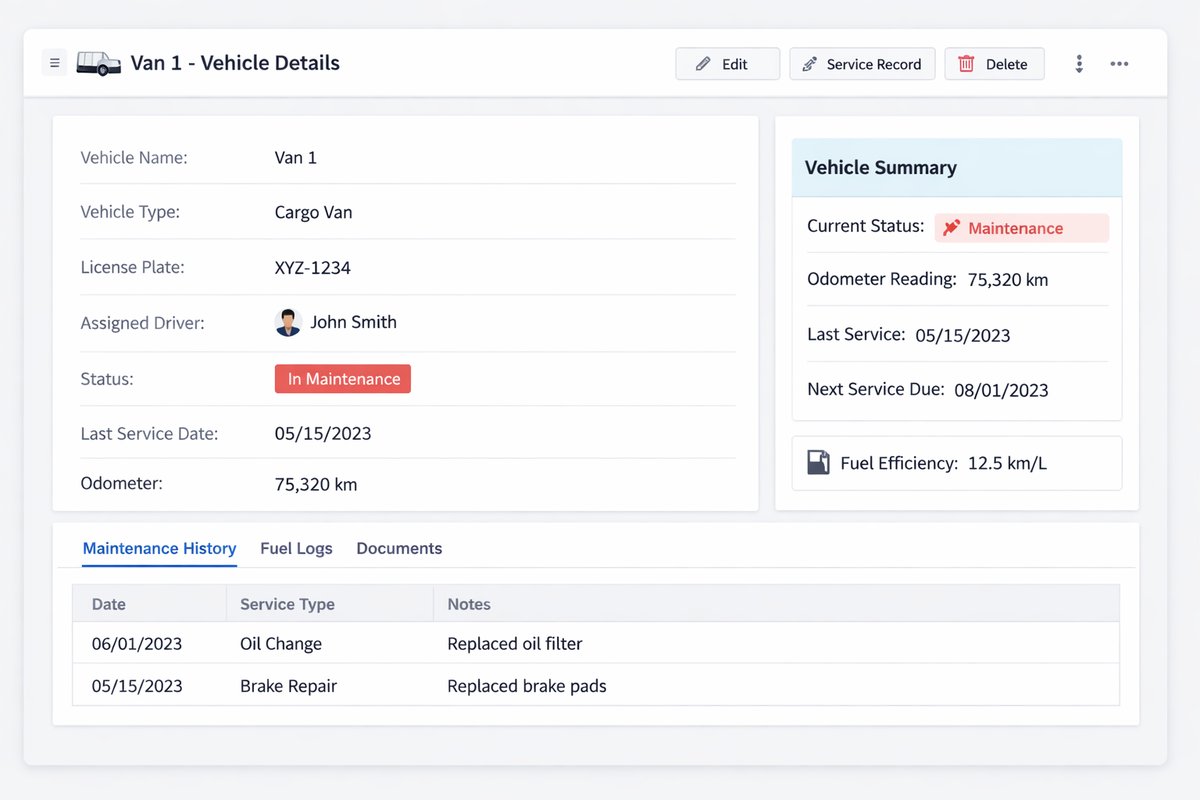
Real screens from the platform.
What teams use most in this module
Practical capabilities that make day-to-day execution faster, cleaner, and easier to govern.
Vehicle Register and Vehicle Profiles
Maintain complete مركبة records with identifiers, classification, ownership context, and core documents in one searchable fleet register.
Vehicles and New Vehicle workflows
Plate number, VIN, and serial tracking
Make, model, vehicle type, and vehicle groups
Ownership and purchase details capture
Registration and core vehicle document management
Vehicle Lifecycle and Status Control
Control fleet readiness by managing lifecycle states from activation through retirement with date-driven status governance.
Active and inactive fleet states
In Shop and Out of Service visibility
Sold lifecycle closure tracking
In-service and out-of-service date tracking
Vehicle life estimates for retirement planning
Driver Records and Driver Documents
Keep سائق records complete with profile details, qualifications, and supporting documents for safer accountability.
Driver master records and contact details
Driver Documents for license and supporting files
Training information and qualification notes
Compliance visibility for document validity
Cleaner accountability between people and vehicles
Vehicle Assignments and Assignment History
Assign vehicles with auditable custody records so every handover remains traceable over time.
Vehicle Assignments linked to current assignee
Assignment History with start and end dates
Starting Odometer and Ending Odometer capture
Handover notes for traceability
Clear custody between driver and vehicle
Maintenance Logs and Service History
Use الصيانة workflows to record service continuity, downtime reasons, and long-term Maintenance Records.
Maintenance and New Maintenance Log entries
Maintenance type and service name fields
Completion date, notes, and cost capture
Maintenance Records by vehicle and period
Downtime control through timely service tracking
Work Orders and Garage Workflows
Run structured Work Order execution from issue identification through repair completion and closure.
Work Order numbering and ownership
Work requested, parts ordered, and garage fields
Maintenance team accountability
Work order price and cost visibility
Issue-to-completion tracking discipline
Fuel Management and Fuel History
Track الوقود transactions with odometer-linked evidence so teams can monitor economy and cost behavior.
Fuel and New Fuel Entry workflows
Fuel type and fuel time capture
Odometer-linked gallons or quantity logging
Fuel cost visibility by entry and period
Fuel History trend analysis and anomaly review
Inspections and Compliance
Manage عمليات التفتيش using forms, schedules, and pass/fail submissions to maintain inspection readiness.
Inspection forms and inspection details
Inspection schedules by vehicle
Inspection submissions with pass/fail logic
Corrective notes and follow-up actions
Compliance recordkeeping for audit review
Insurance and Renewal Tracking
Keep التأمين details and expiration controls current to avoid compliance lapses and emergency downtime.
Insurance company and insurance type fields
Expiration date monitoring per vehicle
Vehicle Renewal Reminders workflows
Date-based compliance reviews
Renewal evidence attachment and history
Vehicle Request and Booking
Coordinate shared fleet capacity using Vehicle Request & Booking workflows without turning operations into a rental process.
Vehicle Request & Booking intake
Fleet Booking and Fleet Bookings records
Booking number and requester context
Approval or handling flow by coordinator
Shared resource planning across teams
Operating Cost and Utilization Visibility
Combine fuel, maintenance, and work order costs with usage context to support pragmatic cost decisions.
Operating Cost Summary by vehicle and period
Fuel costs and work order costs comparison
Total cost trend for high-cost vehicles
Utilization Summary Report context
Cost-per-kilometer analysis where available
Dashboard and Fleet Reports
Use Fleet Dashboard outputs for recurring operational, compliance, and management review cycles.
Fleet Dashboard and status changes visibility
Fuel Report, Maintenance Report, and Work Order Report
Operating Cost Summary and Fuel Summary
Assignment summary and Inspection Submissions
Vehicle Renewal Reminders and utilization trends
Start with this workflow
Follow these structured steps to launch one controlled process first, then expand.
Fleet rollout readiness
1
Prepare five representative vehicles: active, assigned, under maintenance, renewal due, and unclear cost history
2
Define required fields: plate, VIN, vehicle type, branch, current driver, status, odometer, renewal dates, and fuel type
3
Test assignment, odometer handover, fuel entry, maintenance log, work order, inspection, renewal reminder, and vehicle booking
4
Validate handoffs to Logistics, Asset Management, HR Records, Accounting, Procurement, Projects, and Data Exporter
5
Agree monthly review metrics: availability, overdue renewals, maintenance backlog, fuel exceptions, cost per vehicle, utilization, and assignment accuracy
Add a vehicle and make it operational
1
Create vehicle record
2
Add identifiers and classification
3
Attach registration and insurance documents
4
Set initial lifecycle status
5
Verify renewal dates and readiness
Assign a vehicle to a driver
1
Open vehicle record
2
Assign driver
3
Record start date and Starting Odometer
4
Capture handover notes
5
Verify Assignment History and current assignee
Log maintenance and complete service work
1
Mark vehicle for maintenance or In Shop
2
Create maintenance log
3
Open Work Order when needed
4
Capture parts, service notes, and cost
5
Close work and return vehicle to active status
Record fuel activity
1
Create New Fuel Entry
2
Record date, quantity, cost, and odometer
3
Review Fuel History
4
Compare usage and economy over time
5
Flag anomalies for review
Manage inspection and compliance cycle
1
Schedule inspection
2
Complete inspection submission
3
Record pass/fail and notes
4
Update supporting documents
5
Review upcoming renewal and compliance dates
Monthly fleet review
1
Review Operating Cost Summary
2
Review Fuel Summary
3
Review maintenance and Work Order cost
4
Review utilization and status changes
5
Decide preventive actions, renewals, or replacement planning
Who this module is for
Fleet Admin
Fleet Coordinator / Dispatcher
Maintenance Supervisor
Drivers / Operators
Finance or operations reviewers
Management teams reviewing cost and uptime
Common problems this module helps solve
Vehicle records are split across spreadsheets, chat groups, paper logs, and branch files
Operations cannot quickly confirm which vehicle is available, assigned, in shop, out of service, or due for renewal
Driver assignment and odometer handover happen informally without evidence or history
Maintenance, work orders, parts, repair cost, and downtime are not connected to the vehicle record
Fuel entries are missing, inconsistent, or not linked to odometer readings and vehicle usage
Insurance, inspection, registration, or renewal deadlines are missed until service is disrupted
Dispatch sees a vehicle as available on paper, but maintenance, driver, or document status blocks actual use
Finance sees total fleet cost but cannot explain cost by vehicle, branch, driver, project, or period
Managers cannot compare running cost, downtime, utilization, and lifecycle status before repair-versus-replace decisions
Where teams apply this module
Fleet register for owned, leased, rented, delivery, service, field-team, branch, and company vehicles
Driver assignment and odometer handover workflows with clear current assignee and assignment history
Maintenance and work-order control for repairs, parts, downtime, service cost, and return-to-service decisions
Fuel management and fuel summary review when mileage, driver accountability, and usage cost matter
Inspection, insurance, registration, and renewal reminders for compliance and operational continuity
Vehicle request and booking workflows for shared vehicles across branches, teams, projects, and departments
Monthly fleet cost review across fuel, maintenance, work orders, utilization, renewal risk, and status changes
Repair-versus-replace and lifecycle planning for high-cost, low-utilization, or repeated-failure vehicles
Connected records across modules
Logistics Management: fleet availability, driver assignment, and vehicle readiness can support delivery and dispatch workflows.
Asset Management: vehicle lifecycle and depreciation context can connect with broader asset governance and replacement planning.
HR Records: driver context, employee assignment, onboarding, offboarding, and custody accountability can support fleet ownership.

Accounting: fuel cost, work order cost, maintenance cost, disposal, and operating cost review support finance reporting.
Procurement: maintenance suppliers, parts, service purchases, and approval requests can connect with fleet work orders.

Projects and Services: vehicles assigned to projects, field teams, or site work can keep usage and cost context visible.

Data Exporter: fleet registers, assignments, fuel, maintenance, work orders, inspections, renewals, and cost packs can be exported for audit and management review.
Built-in Reports & Analytics
Fleet register completeness by vehicle, branch, type, status, driver, renewal date, and document status
Vehicles by status: active, assigned, available, in shop, out of service, renewal due, retired, or sold
Vehicle assignment history with starting odometer, ending odometer, handover notes, and current assignee
Maintenance logs, work orders, parts, service cost, downtime, open work, and return-to-service history
Fuel entries, fuel summary, fuel cost, odometer readings, usage anomalies, and economy trends
Inspections, inspection submissions, failed checks, corrective actions, and compliance evidence
Insurance, registration, renewal reminders, expiry risk, and missing document review
Vehicle requests, bookings, shared vehicle usage, branch usage, and delayed assignments
Operating cost summary by vehicle, branch, driver, project, and period
Fleet management review pack for operations, dispatch, maintenance, finance, HR, and leadership
Compliance & Implementation Resources
Practical guides to help you rollout and validate workflows.
FAQ
Can we keep all vehicles and drivers in one module?
Yes. Fleet Operations is designed to maintain both vehicle and driver records with shared accountability.
Can we track assignment history and odometer handover?
Yes. Vehicle Assignments can retain Assignment History with Starting Odometer and Ending Odometer values.
Can we log maintenance and work orders?
Yes. Maintenance logs and Work Order workflows can be used together to track work from request to closure.
Can we record fuel and review fuel cost trends?
Yes. Fuel entries feed Fuel History and Fuel Summary views for recurring trend review.
Can we track insurance and inspection dates?
Yes. Insurance expiration and inspection schedules can be tracked with reminder-driven follow-up.
Can we manage bookings for shared vehicles?
Yes. Vehicle Request & Booking supports shared fleet allocation without replacing logistics dispatch workflows.
How is this different from Logistics?
Logistics manages shipment and delivery execution, while Fleet Operations manages vehicles, drivers, maintenance, fuel, and fleet readiness.
How is this different from Asset Management?
Asset Management governs broader fixed assets, while Fleet Operations focuses on vehicle lifecycle, assignments, and mobility-related operations.
Who should control final lifecycle status changes?
Fleet Admin or authorized management roles should control critical changes such as Out of Service and Sold.
Which reports should managers review every month?
At minimum review Operating Cost Summary, Fuel Summary, Maintenance Report, Work Order Report, utilization outputs, and renewal reminders.
Is Fleet Management different from Asset Management?
Yes. Asset Management governs broad asset lifecycle and depreciation. Fleet Management focuses on vehicles, drivers, assignments, fuel, maintenance, work orders, renewals, availability, and operating cost.
Is Fleet Management different from Logistics?
Yes. Logistics manages shipment and delivery execution. Fleet Management manages the vehicles, drivers, maintenance, fuel, availability, and readiness that may support delivery operations.
What should we prepare before a Fleet Management demo?
Prepare five vehicles: active, assigned, under maintenance, renewal due, and unclear cost history. Include driver, odometer, fuel, maintenance, and renewal examples.
Should fuel tracking be included from phase one?
Include fuel tracking early when fuel cost is material, driver accountability matters, or mileage and usage are central to management reporting.
What should managers review every month?
Review vehicle availability, overdue renewals, maintenance backlog, fuel exceptions, cost per vehicle, utilization, status changes, and assignment accuracy.
Ready to evaluate Fleet management and vehicle operations ERP software with your team?
We will map this module to your current process, owners, controls, and rollout timeline.
User guide
How to use Fleet management and vehicle operations ERP software
Setup checklist, key workflows, reports, and troubleshooting.
Talk to our solution team
Tell us what you need and we will reply with a rollout plan and recommended modules.
Fields marked with * are required.
Related content
Related Modules
Often fits plan: Enterprise
AI Sales Assistant
Use AI-assisted calling and qualification workflows to improve first-contact consistency, lead follow-up, call summaries, and CRM handoff discipline.
Often fits plan: Enterprise
Asset Management
Control asset records, custody, locations, maintenance, audits, depreciation, and lifecycle accountability from one controlled workspace.
Often fits plan: Enterprise
Asset Management
Manage company assets, custody, locations, maintenance, audits, depreciation, and lifecycle accountability from one controlled workspace.
Related Use Cases
Accelerate Order to Cash
Connect sales, fulfillment, invoicing, and collections to reduce revenue leakage and improve cash conversion.
order-to-cash
revenue-operations
cash-flow
Control Production Costs
Tie material usage, labor capture, and overhead allocation to each production order for reliable margins.
manufacturing-management
costing
inventory-warehousing
Related Industries
ERP for Manufacturing Operations
Manufacturing ERP for production planning, MRP, inventory, quality, costing, and shop-floor control across growing factories.
manufacturing
mrp
production
ERP for Clinics and Outpatient Networks
Sector playbook covering pain points, workflows, module fit, and buying checklist for erp for clinics and outpatient networks.
industry
operations
erp
Related Guides
Build ZATCA audit trail controls for SMB finance teams
Practical guide for build zatca audit trail controls for smb finance teams with execution steps and buying support links.
zatca
saudi
compliance
ERP Implementation Playbook
A practical, phased guide to planning, launching, and scaling ERP adoption across teams with measurable outcomes.
implementation
operations
change-management